Browser Warning
VHBio is not supported on Internet Explorer and will not provide you with the best experience. Please consider switching to a compatible browser such as Microsoft Edge, Google Chrome or Firefox.

We genuinely believe in what we do and want to be the best life sciences supply partner. Any information to help our journey is very welcome. Please take a few minutes to help us improve and make your future experiences better:
The QuantumDye™ v3.1 Terminator Cycle Sequencing Kit is based on the Sanger Dideoxynucleotide Chain Termination method and has been developed as a direct, drop-in substitute for BigDye® Terminator v3.1. QuantumDye™ 3.1 Cycle Sequencing Kits A direct, drop-in substitute for BigDye® Terminator v3.1, with no changes in protocol, dilution, workflow, calibration or settings using DyeSet Z. […]
The QuantumDye™ v3.1 Terminator Cycle Sequencing Kit is based on the Sanger Dideoxynucleotide Chain Termination method and has been developed as a direct, drop-in substitute for BigDye® Terminator v3.1.
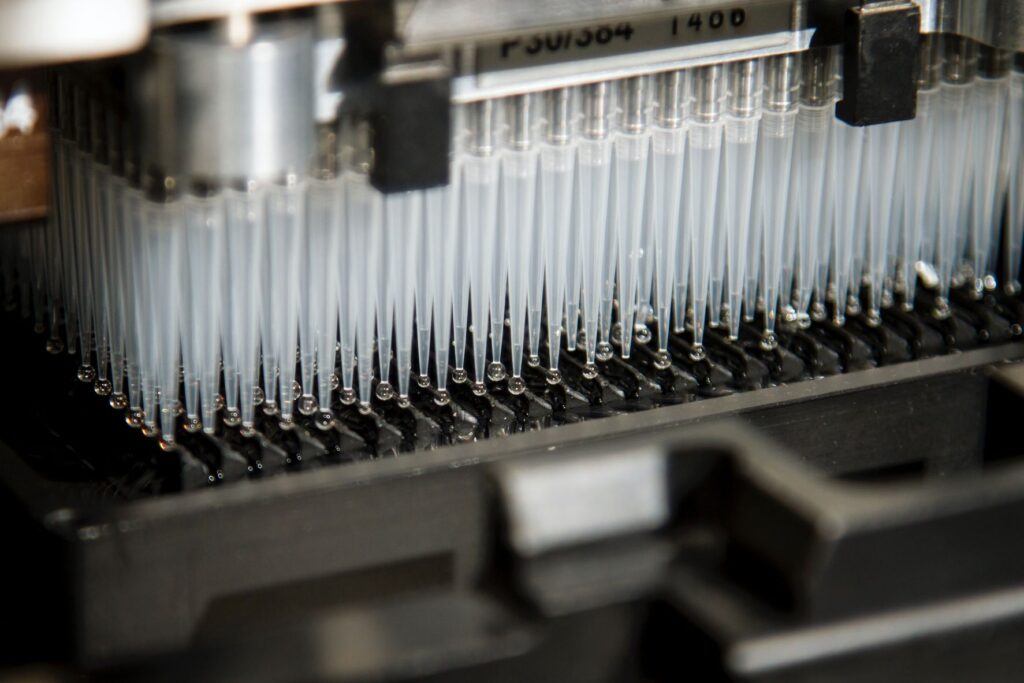
The kit is provided with a 2.5x concentrated ready-reaction premix, plus cycle sequencing dilution buffer and controls (plasmid DNA template and sequencing primer) fully optimised for a highly flexible chemistry, designed for all kinds of cycle sequencing applications, including de novo sequencing and resequencing. The kit generates data with uniform peak heights and optimised signal balance to produce long, high-quality reads.
Our customer, Micropathology Ltd., trialled QuantumDye™, and found the product to have better performance than ABI BigDye and a more streamlined change as compared to Promega, which required changes to the protocol.
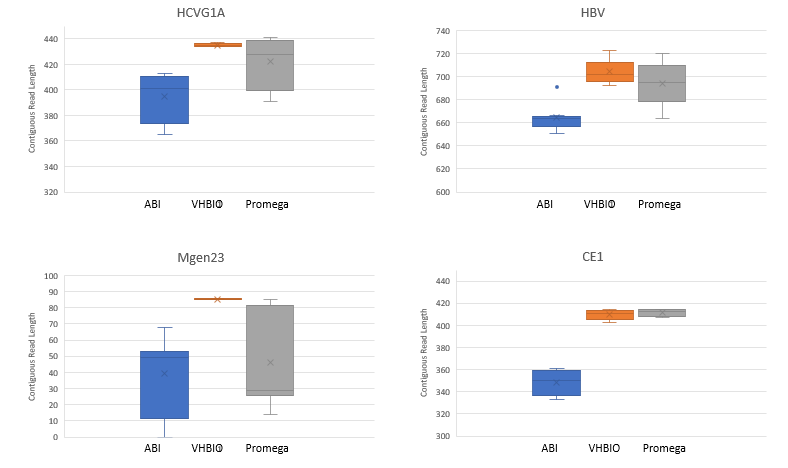
“The three charts show the contiguous read length for four amplicons (HCVG1A, HBV, Mgen23 and CE1) for each of the reagents tested. The Mgen23 amplicon is very short and we have issues producing good quality sequence data with recent batches of BigDye. As you can see from the chart (Mgen23) we obtain superior sequence data when using the QuantumSeq.
“We are now using up our stocks of BigDye and are looking forward to moving over to the QuantumSeq dye for all sequencing based assays.”
– Dr Jennifer Holden, Post-doctoral Scientist, Micropathology Ltd

The sequencing of single or multiple genes is often the first step in the genetic diagnosis of a disease and informs subsequent treatment and care. The development of the Sanger sequencing method in 1977 allowed labs to sequence DNA fragments with automated base calls for the first time. While continual developments have led to innovative technologies such as Next Generation Sequencing (NGS), Sanger sequencing is still considered the gold standard technique for some clinical scenarios, for example, 16S sequencing, human leukocyte antigen (HLA) typing, microsatellite instability (MSI), tandem repeats, and rare variant confirmation. 1,2

| Product | Units |
|---|---|
|
QuantumDye Terminator Cycle Sequencing Kit v3.1 21QSD3-024 |
24 reactions |
|
QuantumDye Terminator Cycle Sequencing Kit v3.1 21QSD3-100 |
100 reactions |
|
QuantumDye Terminator Cycle Sequencing Kit v3.1 21QSD3-1000 |
1000 reactions |
We work with a range of suppliers with novel and innovative products sourced from our global partners.
Find Products